Swabbing Seaweed
Published:
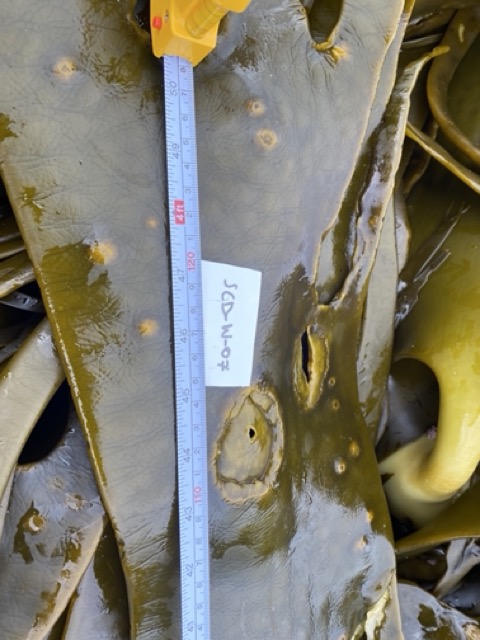
Good tides coincide with good weather - time to swab some kelp! Kelp microbiome and disease field work continues.
The warmer weather combined with some really good low tides meant it was time to get out and collect some more samples for our ongoing kelp microbiome and disease work.
Focusing on sites around Dunedin known to have high levels of kelp disease, we headed out with the goal to expand our collection of microbiome swabs and diseased tissue samples. This time, we particularly wanted to compare microbiomes (symbiotic microbial communities) in kelp showing signs of disease with those on outwardly healthy individuals. It is known that dysbiosis (disruption in the natural symbiotic microbial communities) can create opportunities for disease to take hold in humans - but we don’t know much about this process in seaweeds, which are critical ecosystem builders particularly exposed to stress from climate change.
We’ll use the samples collected to characterise the microbial communities associated with healthy and diseased kelp using DNA sequencing, and will also further investigate the pathogens causing the diseases - whether they be bacterial, parasitic, or viral.
Combined with samples from the sub-Antarctic, Chile, and other southern hemisphere lcoations, we’re hoping to provide some insights into the relationships between microbes, pathogens and disease in kelps.